
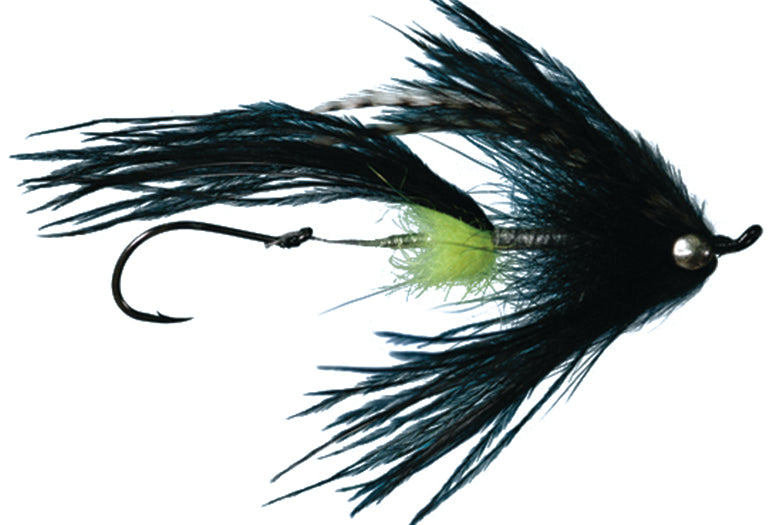
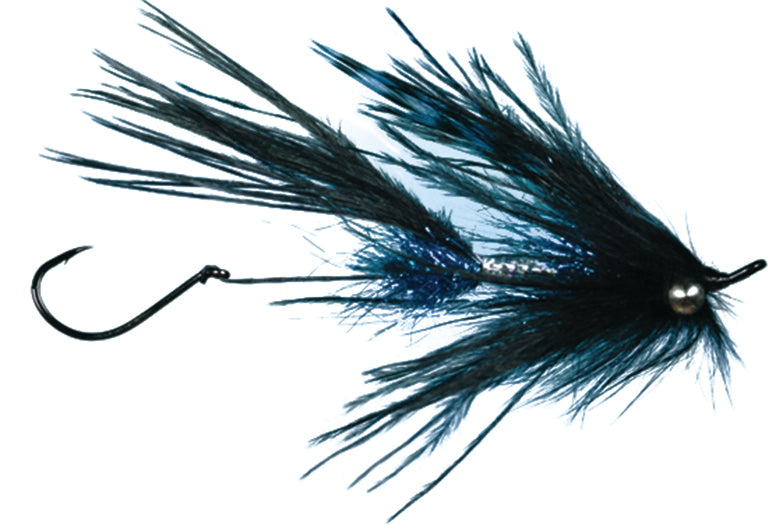
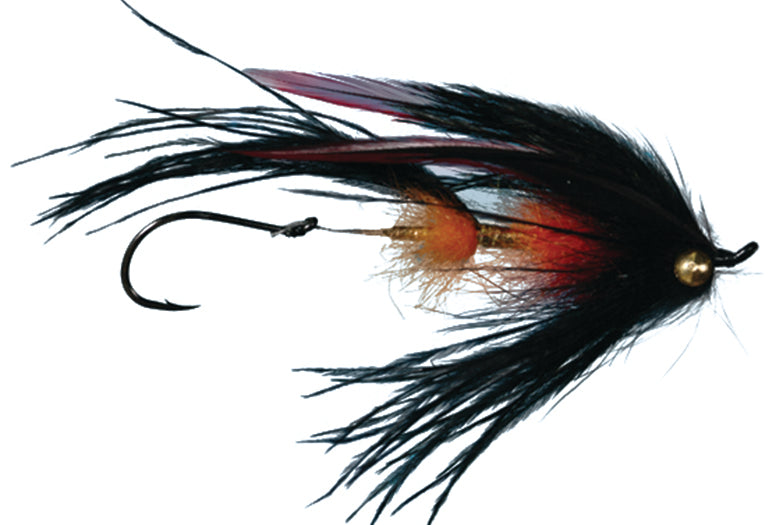
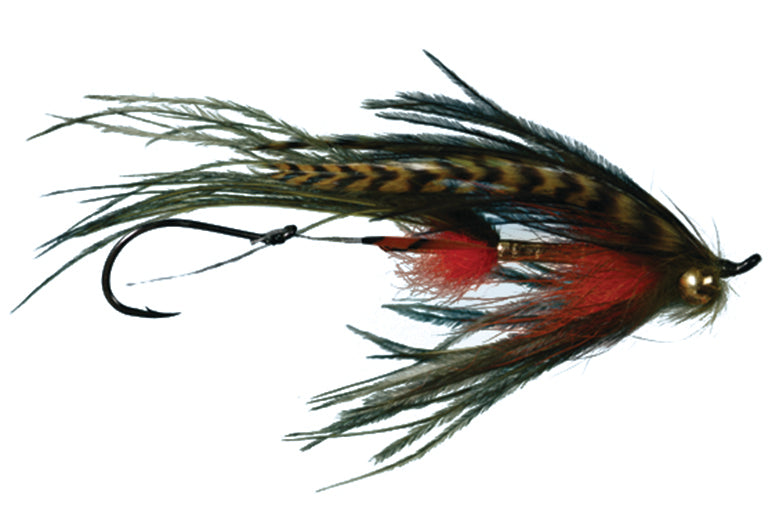
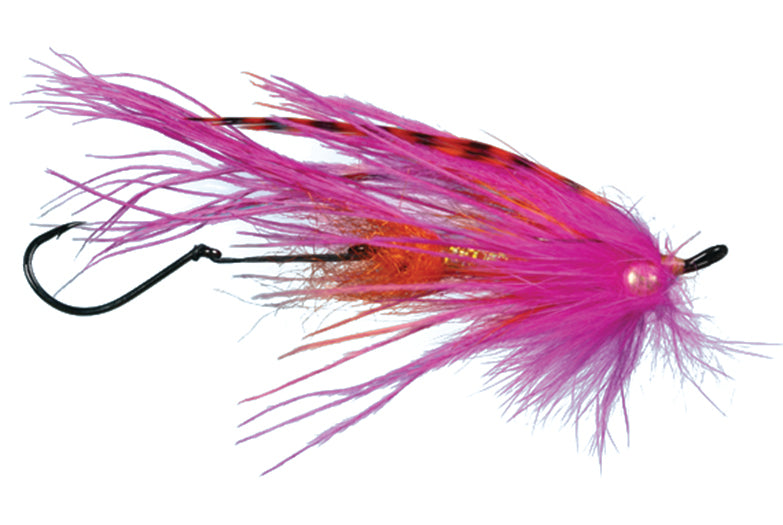
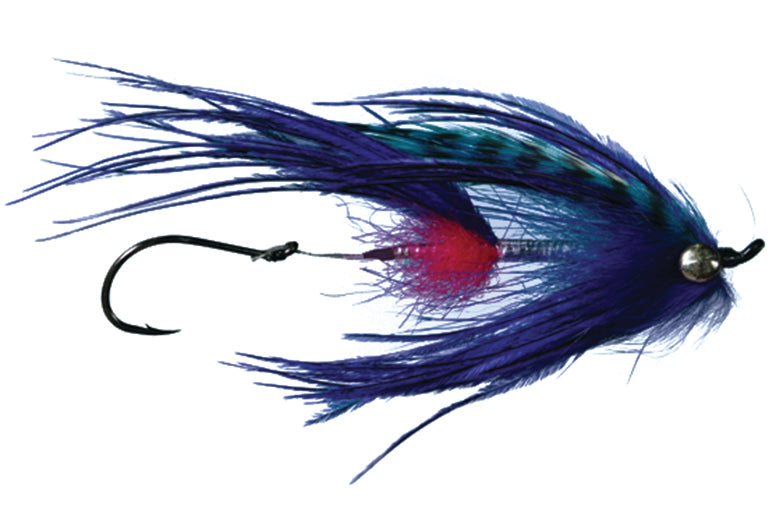
Signature Intruder by Solitude

Solitude's Signature Series Intruder - Steelhead Fly #2 hook
The Signature Series Intruder was not a simple case of sitting down at the vise one evening and creating a new pattern. It started back in the early 90's with a circle of guides at an Alaskan wilderness lodge. The first Intruder-style fly was the brainchild of Ed Ward, and was originally designed for king salmon. This shank-style fly was a solution for creating huge, plug-like silhouettes that couldn't be achieved on conventional fly hooks.
While fishing these flies for kings, it was impossible not to notice the by catch of huge Alaskan rainbows. It didn't take long for us to realize that if rainbows couldn't resist the fly, steelhead might have a similar problem. Unfortunately, we'd have to endure a grueling summer of guiding before we'd get to swim these patterns in steelhead waters.
That September, I crammed into a truck with Ed Ward and Jerry French and headed for B.C. with my drift boat in tow. Despite low-water conditions, we fished the Intruder, and it worked.
The standout prototype was an olive version Ed had created. At the time, we thought it looked a lot like a sculpin. In actuality, I think it was Jerry's animated description that fit it best: With fly in hand pretending to swim it through the air said "the fish must think it looks like some kind of intruder." It all took off from there.
Testing Grounds:
The next winter, I fished with Ed on the Skagit, and he asked me if I was still using big flies. I proudly showed him my newest creation, only to have it dwarfed by what looked like a small bird tied to his line. From that point on, our Intruders grew bigger and bigger until one day I could barely cast them. We never found a size too big for the steelhead but we've since backed off on the giant sizes to end up with a pattern that still provides a large silhouette with limited materials, so it sinks and swims well, and casts easily.
Intruder development has been an ongoing process since day one. Introductions of new and different materials have defined its evolutionary stages. The first Intruders were tied with marabou, and were basically large knock-offs of George Cooks marabou flies. From marabou the fly progressed to schlappen and then turkey feathers, which provided exceptionally long hackles.
I thought Intruders would always be tied with turkey feathers but about the time I'd collected a lifetimes worth, Ed found and started tying with ostrich feathers, which were even longer. I've since narrowed my Intruders down to two different styles in an assortment of colors.
The Signature Series Intruder has an ostrich hackle/saddle shellback, which creates a large silhouette, with a bulky hair collar behind the front hackles.
Marabou and rabbit-strip flies can be heavy and difficult to cast once wet. The Intruders design solves both problems. First, the large hackle dressed over a fairly sparse body produces a substantial silhouette with less material. This allows the hackle to swim freely, giving the flies lifelike action. Second, since the Intruders materials don't hold water as readily as rabbit strips or marabou, they are easier to cast.
Another crucial Intruder component is its heavy dumbbell eyes. Lead or tungsten eyes allow sparsely dressed patterns to sink fast. It is also important to note that the Intruders design makes it less buoyant with less water resistance than more heavily dressed flies. This means Intruders rise slower in the water column once they're under tension and swinging.
Confidence is Crucial:
The Intruder is now my mainstay for nearly all steelhead fishing. Even under normal summer water conditions, I find natural-colored Intruders catch more steelhead than the same old Green Butt Skunks or other traditional patterns. Whether trying to pull fish in cold water, or just knowing I'm throwing something different with the Intruder, I always have confidence in it.
When fishing the Intruder, cast slightly upstream and make a big upstream mend. This takes tension off the fly and allows it to sink down to the fish's level. Just as the line is about to come tight, kick another small mend in it, straightening the remaining slack line. Its important to get this second mend in before the line comes tight and the fly starts to swing. Otherwise, you'll lift the fly out of the zone.
I'm a big believer in not over-mending the line. Once the fly is fishing, let it swim. Follow the line around with your rod tip and wait for the pull!
*note the Crawdad color is much more olive than indicated in picture